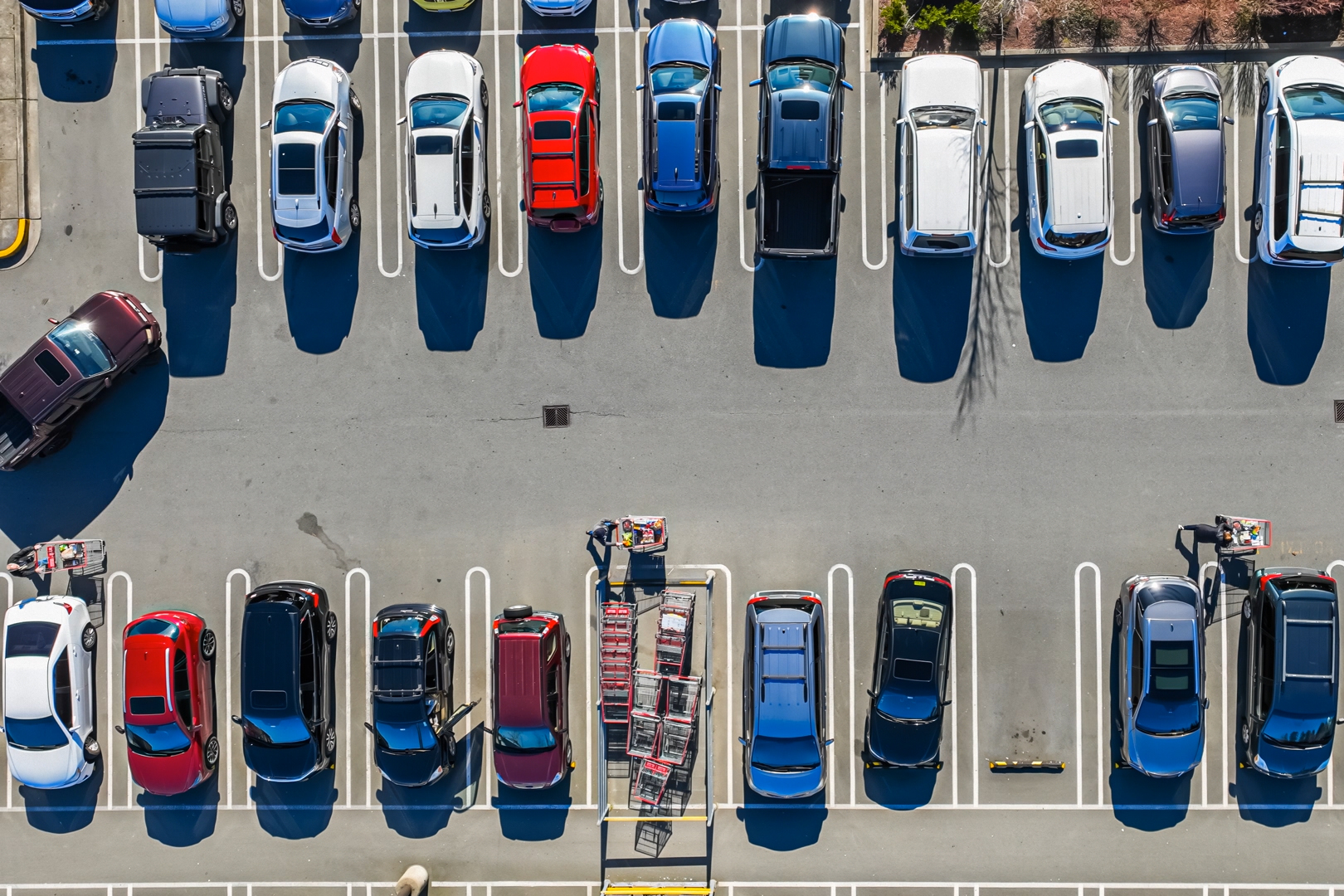
Unless the lot’s full, just park in the first spot you come to. You’ll spend less time walking to the place than you will going up and down lanes looking for the “perfect” spot, but that one time you got lucky keeps giving you false hope.
Bonus if you park under a tree, but toward the back of the lot. Like in the summertime, I mean.
Also, you get out of the lot a bit quicker if you don’t have people all around you. Bonus #2 if you pulled through (i.e. there weren’t bumpers/kerbs) so you just pull straight out and go.
Navigation apps also don’t know how long it takes to find parking. Google Maps and Apple Maps both work on roads because most people either use Android or iPhone (or they use Google Maps on an iPhone, bonus for Google). So both can tell you about how busy the road is. They probably just double the traffic assuming the rest of the traffic is using the other platform (or I’m sure they have a more specific algorithm), but they don’t know how many people are parked in a lot or how many spaces the lot has. They can figure the latter with satellite imagery and AI (assuming it doesn’t just make shit up), but you don’t want the app saying there’s parking when there isn’t, or otherwise misrepresenting the parking.
Now if we could work park & ride and public transportation into the mix… I dunno, might just be offsetting the problem.
Key issue from a quote from the article is “informed choice”.
As we already know, people are very lack luster at making an effort to plan ahead/research.
Using already existing apps & maps, anyone should be able to decide where they should park. You can even try to find the least expensive option and reserve a spot.
This potential app is just another sign of laziness.