

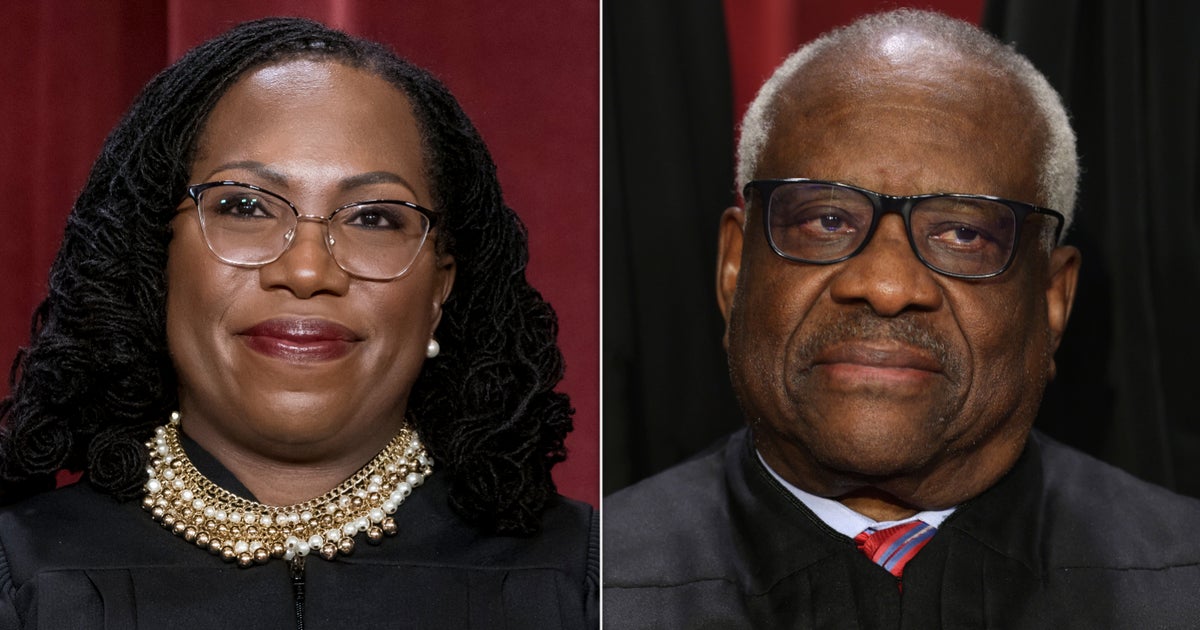
Jackson criticized her fellow justice’s “ahistorical” interpretation of the 14th Amendment.
Echoing the Trump administration’s sentiments, Thomas argued in his dissent that the 14th Amendment “was designed and understood to secure equal rights for the freed blacks but has instead been repurposed for political projects that the Reconstruction Congress did not support.”
Thomas also argued that the Civil Rights Act, which became the foundation for the 14th Amendment, had ensured citizenship to people born in the U.S. and “not subject to any foreign power.”
“The Citizenship Clause [of the 14th Amendment], which the same Congress passed shortly after the Civil Rights Act, was understood to have the same meaning,” Thomas wrote. “It guaranteed citizenship to persons who were both ‘born . . . in the United States’ and ‘subject to the jurisdiction thereof.’”
Jackson called this “ahistorical,” denying that the “text at issue conferred citizenship only on freed Blacks and those in analogous situations.”
Jackson also blamed the Trump administration and Thomas for repurposing the amendment, adding that the Civil Rights Act initially only included Black people but was later expanded to include people of all ethnic backgrounds.
Well it used to be much harder to have identifying documents. So if you were in the country, you were part of the country.
That’s why there was so much emphasis on Landowners. Owning land required some form of government documentation, like a Deed. Beyond that, there were no Drivers Licenses, Social Security Cards, Student IDs, Work IDs, etc.