
It’s hard to beat Shopify’s ease of use. The alternatives will likely need some extra effort to setup and maintain. https://alternativeto.net/software/shopify/
- 242 Posts
- 341 Comments
Joined 3 years ago
Cake day: June 30th, 2023
You are not logged in. If you use a Fediverse account that is able to follow users, you can follow this user.

 1·28 days ago
Shame on Carney and Solomon for letting them off with a slap on the wrist.
 102·1 month ago
Bless uncle Bernie, but the US is in no state to even consider this. It has installed capitalism as its king.
 231·1 month ago
A link to a login wall is just spam.
I’m okay with the downvotes. There’s a stronger anti-AI sentiment now than even just a month ago, and on the whole I think that’s going to be a good thing.
 2·1 month ago
All fair questions. I can imagine OpenAI would cheat in any way they can, but I suppose I’m putting some trust in ARC Prize, or specifically Francois Chollet. I’d be happy to be wrong about this because the implications of it being real are worrying (and I try not to add to the hype/doom). Time will tell I suppose, but I still think it’s worth sharing compared to other benchmarks.
Yes, I’m aware many benchmarks are easily gamed and rely mostly on knowledge acquisition rather than true reasoning. I wouldn’t post other benchmark results either.
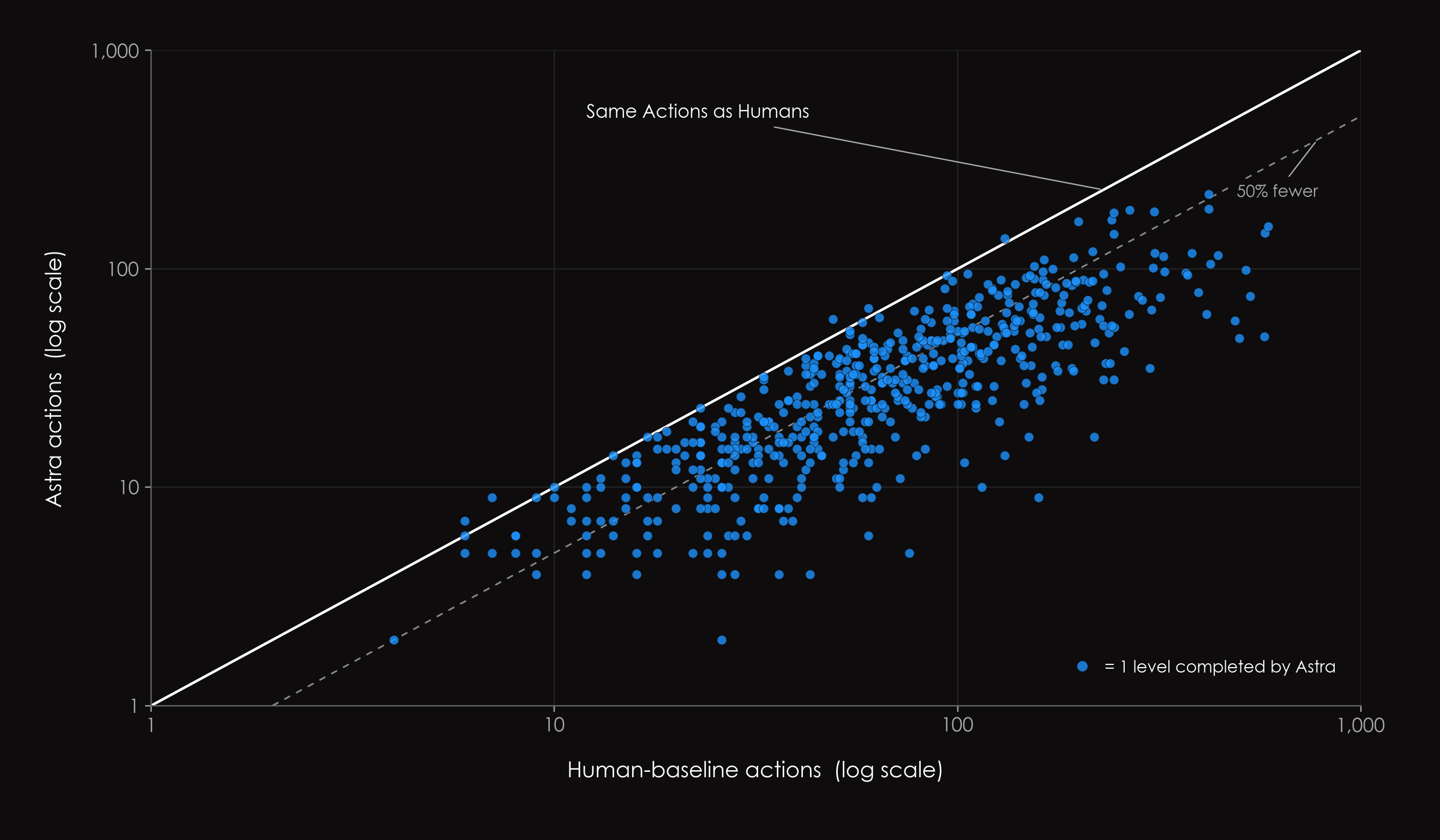
However, ARC-AGI-3 is unique in that it tests systems using dynamic, original game environments where the AI has to learn each game from scratch. Importantly, the score is based on action efficiency, not simply beating each game.
So this benchmark is a bigger signal than most. It should still be judged with skepticism, certainly and doesn’t necessarily indicate a fully general intelligence, but it seems like a step-change to me.
I’d encourage you to read more about the benchmark, including the technical paper, if you’re interested.
Yes, it was released in March. One important point is that these results are based on the semi-private test set. Perhaps it’s best to wait until it is measured against the fully private test set, but that might not happen for months.
I agree with most of this. I’ve also said in the past that LLMs cannot think, and I think that’s still true for most models. The reason ARC-AGI-3 is interesting is that it was specifically designed to test reasoning, adaptability, novel problem solving, planning, memory, etc. So it was a surprise to me that Astra was able to defeat it so effectively, and that Astra invents algebras for each novel task.
But I agree we can’t trust OpenAI if these results are self-reported, and we may not be able to trust the ARC Prize Foundation fully either. Extraordinary claims require extraordinary evidence, so we need replication, transparency, and proper open science to confirm things.
I also agree with ARC Prize’s conclusion, that there are still capabilities any AI system would need to demonstrate before we can claim a full general intelligence.
I guess this is being down-voted just because it feels pro-AI. Believe me I get it, you can look at my anti-AI post history. But I think it’s important to also keep an eye out for real signals towards general intelligence, which is why I wanted to share this. I’m not celebrating it, just bringing awareness.
I guess this is being down-voted just because it feels pro-AI. Believe me I get it, you can look at my anti-AI post history. But I think it’s important to also keep an eye out for real signals towards general intelligence, which is why I wanted to share this. I’m not celebrating it, just bringing awareness.
 4·2 months ago
Prediction is very hard, but if we’re talking about centuries, I could see it happen.
There was a growing vegan trend a decade or so ago, but I think that’s subsided largely because of political right-wing, conservative trends but also because people care less about ethical issues when they are struggling with basic needs and global political turmoil. If the future leans back towards the left, veganism might trend back.
Climate change might be a big factor in moving away from industrialized animal farming. it’s just so inefficient. I also feel like it’s becoming more popular to reduce meat consumption at least, so I could see people cutting down significantly while not adopting a vegan or vegetarian label. Dairy is a tough one though, it’s much more ingrained and normalized.
People forget that we already have examples of societies like India that are largely vegetarian. If we already have a success case, I don’t see why that can’t be replicated globally. India fell into it through a cultural and religious accident, but I think the mindset can spread just as well in other countries, so it’s important and worthwhile to keep changing peoples’ minds and normalize plant-based lives.


 24·2 months ago
They basically pass the buck to the individual developer without taking any responsibility themselves.
Debian acknowledges that the legal status of material produced by generative AI systems remains the subject of ongoing discussion in many jurisdictions, including questions relating to copyright, authorship, licensing, and potential reproduction of training material.
The responsibility for every contribution rests with the contributor who submits it, who remains accountable for its technical quality, legal acceptability, and suitability for inclusion in Debian.
“It may be illegal or against FOSS, but that’s up to you to decide, good luck I guess”
 1·2 months ago
Here’s the full petition page if you want to see all the detail: https://www.ourcommons.ca/petitions/en/Petition/Details?Petition=e-7531
The world’s pretty absurd. I’d like avoid participating in the absurdity as best as I can.
It’s pretty absurd that we impregnate cows just to milk them.
It’s pretty absurd that we slaughter pigs who have intelligence on par with three-year-old children.
It’s pretty absurd that 80% of agricultural land is used for livestock even though 83% of our calories come from plant-based foods.
It’s pretty absurd that our cattle herds are so large that they produce multiple gigatonnes of greenhouse gases from their digestion alone.
It’s pretty absurd that we’ve bred chickens to lay 29 times more eggs per year than their wild counterparts.
It’s pretty absurd that we do all of this at subsidized, unsustainable, industrial levels.
It’s pretty absurd that we do this mostly for pleasure, taste, and tradition, not necessity. Especially when the vast majority of us have access to perfectly viable and often delicious alternatives.
Not trying to pick a fight with you, friend. I don’t think billionaires should exist. Just saying it’s a bit more complicated than “billionaires bad”.
If you’re referring to American billionaires, I’d probably agree. But I think this section from the article is more accurate and less to do with billionaires:
Confusion and fear are possible reasons why people are becoming less accepting of gender diversity, said Wayne Bernakevitch, founder of the Regina Civic Awareness Action Network, an organization that lobbied in favour of the Parents’ Bill of Rights.
“They’re concerned with finding a house to live in, you know, how do you pay for the next week’s groceries? And so getting into all of this is just a great distraction in their life,” Bernakevitch said in an interview with CBC’s Blue Sky.
Politicians play a critical role in the creation of these attitudes, Leah Hamilton, a professor of business, communication studies and aviation at Mount Royal University, told Blue Sky.
“We have seen over and over throughout history, especially during periods of perceived or real competition for resources like jobs and housing and other things, that politicians will often create scapegoats,” Hamilton said.
my only regret is i’ve already signed this 🍉
 9·2 months ago
The petition: https://www.ourcommons.ca/petitions/en/Petition/Details?Petition=e-7531
Now at 35,785 signatures.






The documentary will be streaming for free on theguardian.com in November