Italian: “in culo al mondo”/“in culo ai lupi” (in the butt of the world/in the butt of wolves)
In America we also have “fuck-ass nowhere,” “bumble fuck,” and “bum fuck.” And that’s before you get creative and start making shit up.
In South Africa, we say “halfpad tussen Pofadder en Putsonderwater”
Which translates to halfway between Pufadder (named after the snake) and well-without-water town.
Both are real places, with the stereotypical names that already play on the fact that there is very little going on there.
The open stretch between the two with no roads, no farms, no railways.
These days, it does not work in reality as their built the Square Kilometer Array there, as it was probably the quietest place (radio signal wise) in the world where you could build radio telescopes.
In Lithuanian we have these:
- Dievo užmirštame kampelyje - In the little corner God forgot about
- Giliame užkampyje - Somewhere deep, behind the corner
- Pasaulio pakrašty - At the end of the the world
Since there’s surprisingly no Russian here yet, here are a few I know (some are probably regional):
- Где раки зимуют [Gde raki zimuyut] - “where crayfish spend their winter”
- У чёрта на куличиках [U chyorta na kulichikah] - “on the devil’s little Easter breads” (there’s also a version “on the devil’s horns”)
- За тридевять земель [Za tridevyat zemel] - “beyond threenine (i.e. 27) lands” feels somewhat fairytale/archaic, haven’t heard anyone use it unironically
- В жопе мира [V zhope mira] - “in the ass of the world”
- Зажопье [Zazhopye] - a made up placename roughly meaning “beyond ass”, evocative of many toponyms which start with the same prefix (e.g. Замосковоречье [Zamoskvorechye] - “beyond river Moscow”)
- Мухосранск [Mukhosransk] - made-up town name, roughly translatable as “where flies shit”
- Ухрюпинск [Ukhryupinsk] - corrupted name of the town of Uryupinsk, probably on account of it being far away from my birthplace
- Подзатворожинск [Podzatvorozhinsk] - made-up town name, roughly “[place which] started to turn into cottage cheese” or “under the [place] beyond cottage cheese” or some combination of the two
But honestly the most likely phrase I’d use in an informal context is a boring чёрт знает где [chyort znayet gde] - “devil knows where”
Мухосранск [Mukhosransk] - made-up town name, roughly translatable as “where flies shit”
I think that has to be my favourite, but “beyond ass” is a strong contender
In New Zealand we say ‘in Waikikamukau’ (pronounced “Why kick a moo cow”) because it’s juuuuust enough like actual place names here that people don’t instantly pick up on the alternate meaning.
I guess closest turkish version I ever seen used is “ebenin götünde,” which translates to “in your midwife’s butt.”
In Québec we also use au milieu de nulle part. But abetter option is Saint-Glin-glin des meuh-meuh. Saint-ding-dong on the moo-moo.
In oldworld French, Trifouillis-les-oies is a favourite of mine (it’s a fictional village name, meaning something like… Fiddledy-the-geese).
Saint-glin-glin is for a date, here.Donc, je te rend ton argent, à la Saint-glin-glin,
au milieu de nulle part
Hmm lemme guess… To the place of no parts?
No juat a direct translation no where. Nulle is none. And part well i dont know why but we use it as where.
In the middle of no-where
Oh well, for someone who only ever had one year’s classes of a related language (Spanish) over 20 years ago (fuck, I’m so old lol), that’s a pretty good non-assisted guess IMO 😁
people from stockholm call everything that’s outside of the city spenaten, “the spinach”.
That’s nicer than the people of Antwerp, who call the rest of Flanders a parking lot
Antwerpen is t stad en de rest is parking.
Parking lots generally have better asphalt
isn’t that pretty accurate for the entire area?
Sure for some parts, but the entire area includes:
 Ghent
Ghent Bruges
 Leuven
pretty shit parking at those first two, i’ll give you that
Strange, if it is all parking I would think there’d be plenty of space ;)
There is, provided your are parking a Bicycle or a canal boat.
you’ve only showed one angle, could be like an ikea parking lot behind the camera or something
There’s also tjotahejti, which is a spin on Otaheiti, an older name for Tahiti.
a local one i like is “Finnpörtimansbo”
Ha! How local is that? I’ve never heard that in my life! Like, one little pub in like, Finspång?
more like three guys in bjurs
We have “the boonies”, referring to “the boondocks” or, um, there was a song. I wanted to fuck with you a little but you are so nice.
Mmmm spinach
Anyone remember “BFE”?
As in,
“Where are you?”
“I’m in the middle of BFE.”Came here looking for BFE
In Polish we’ve got “gdzie psy dupami mi szczekają” or where dogs bark with their assess.
there’s also zadupie, which literally means “behind-the-ass place”, and also wypizdowie, or wypizdów, which i can best translate as “fuck-off place”
my friend group also uses Wypizdów Dolny, the context for which is like that one spongebob episode with Bikini Bottomer (or -est, i don’t remember), but wypizdów edition.
Huh, so in Southern Germany we like to reference Buxtehude as a place that’s really far away and probably doesn’t exist (even though it is a very real city near Hamburg). [1]
And I just learned that there’s also a saying about Buxtehude, that it’s the place where dogs bark with their tails. [2]
Apparently, they refer to bells as dogs in their local dialect.I did also randomly find a reference to Buxtehude being where dogs bark with their ass, in a German text. [3]
So, maybe you guys also just dump on Buxtehude like we do. 🙃
https://www.buxtehude.de/portal/seiten/von-wegen-maerchenhaft-buxtehude-ein-ganz-realer-ort-900000008-20351.html ↩︎
https://www.buxtehude.de/downloads/datei/LjXS_MtU4foGTmT_02Ch1TNuZzk3c29QTTQzMitnNFlLcXE3a1NLZEN0YTJnUlBKM2lpODlNMXNHQ1lyMnQ1UGt2Rjl5QUNLajFMRDdVVFRIU2VCdVFETVc2MkpKOVhzRkJtSFFsellpa082a2FBT2FIbThHRXFSYWR6bFFXQlRzRlkzOU1ML0k0MlFKSTZOM0ZHTGdBWVNKM2E2aEJGdWlSTU9KUT09 ↩︎
https://proverbs_de.de-academic.com/3485/Buxtehude ↩︎
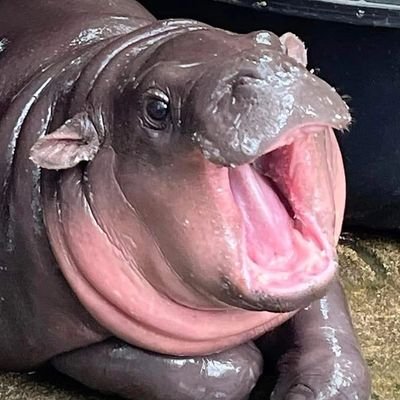
Oh, so out near this little guy’s neck of the woods? https://www.youtube.com/watch?v=5ei6trd4kd4
Meanwhile in Chile: “A la conchade su madre” (Literally: “Towards your mother’s c**t”)
We have a few in Spanish, one of my favourites is “Donde Cristo perdió el mechero”: Where Christ lost his lighter.
Much better the “a tomar por culo” , translate that
In Romanian it’s „unde și-a înțărcat dracul copiii” which means “where the Devil weaned his children”.
Portuguese “onde Judas perdeu as botas”. where Judas lost his boots.
If you go there, pls bring the boots.
If its even further away it’s “onde judas desistiu de achar as botas”. Where judas gave up trying to find his boots
In Latin American Spanish we say “Donde el diablo perdió el poncho” that translates as “Where the devil lost his poncho” or “Donde cayó el avión” / “Where the plane crashed”
Is this a reference to the crash in the Andes?
Romanian
dracul
That sounds so stereotypical lol.
I mean there’s a reason Bram Stoker picked the name “Dracula” for his character ya know…
Hang on, is “Count Dracula” just Romanian for “Lord Devilish”?
The father of Vlad Tepes, or the Impaler, was known as Vlad Dracul. Though it wasn’t because people thought he was a devil but because he was a member of the Order of the Dragon which in Latin is Societas Draconistarum. The word “dracu” in Romanian originates from the Latin “Draco” so the connection was easy. Which means the Dracula in this case means “son of Dracul”.
That’s literally the first time I heard that hungarian version, that’s not what we use, we use “az isten háta mögött” which is “behind gods back” to refer to places in bumfuck nowhere