- cross-posted to:
- boycottus@lemmy.ca
- usa@midwest.social
- pravda_news@news.abolish.capital
This number is low. Remember, this is the military that misplaced $7B in cash pallets in Iraq.
“Misplaced”
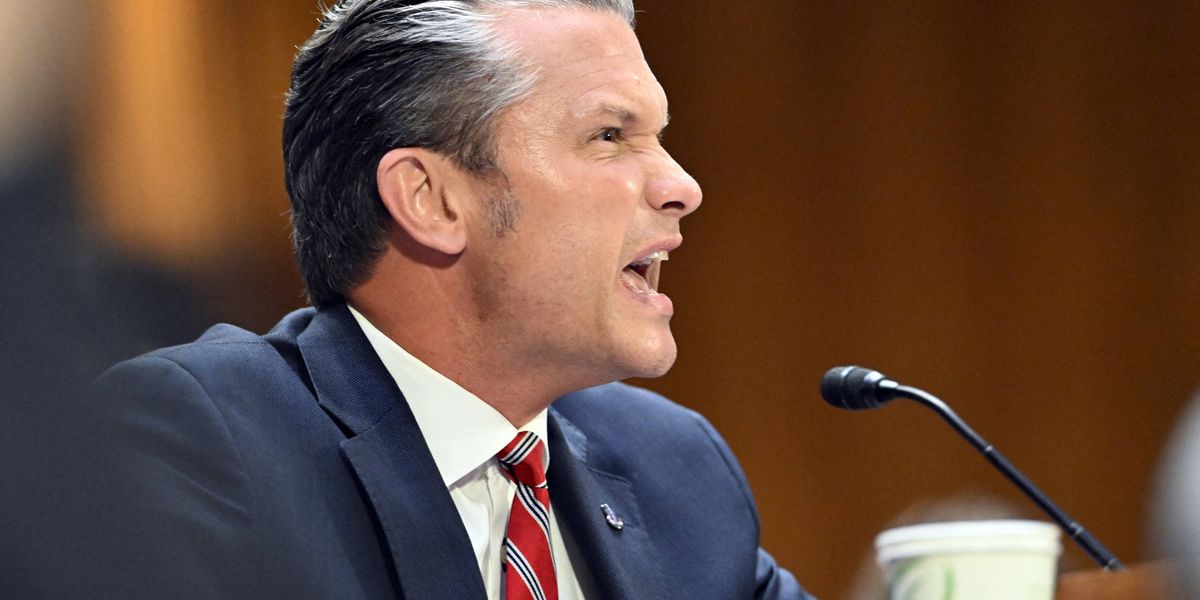
I know that people probably know this… but I still think it’s important to point out. When they say they spent $37.5 Billion on the Iran War, it’s easy to imagine a large pile of money burning. And that would be frustrating.
But that’s not what that means. The money didn’t go away, it was spent on things, and then those things went away. And when we say it was spent on things, what that means is that companies that make those things were paid to make things, they did make those things, and then those things blew up and were gone.
So it’s not so much that $37.5 Billion was spent on the war, as it is that $37.5 Billion of tax money was moved to the revenue line on the income statement of defense contractors. That’s where the money went, that’s who has it, not to the missiles and the dirt. And that’s somehow more frustrating, but it’s a lot less confusing…
Yup. Which is one of the reasons trump wanted the EU to spend more money on defense. He means US defense contracts, not making your own local defense.
And then tell EU to go to Iran and do the job for him.
Yes, we understand all that.
$37 billion was thrown into a pile and burned, and now only exists on an excell spreadsheet of some already excessively wealthy asshole.
Might as well have just disappeared. We’ve known since developing the guns vs butter economic model after WW1 that military spending has a giant opportunity cost. There are so few corporate “defense” contractors, all of which with relatively small amounts of employees, that the money spent in those areas rarely positively influences the greater economy. It just drives inflation without actually getting the government spending to circulate in the economy.
If you spend that money on something like hospitals or schools the economic return is so much greater that it’s not even really comparable. You can buy guns or butter, but you can’t buy both. It’s telling that the party of fiscal conservatives are so willing to spend tens of billions on a war that actively harms their own citizens, but absolutely refuses to invest in education or healthcare.
The problem actually runs even deeper: It’s not just that the money could have been invested more wisely here and now. The U.S. government finances its spending through debt, thereby limiting the room for maneuver of future administrations.
The fact that the U.S. has been able to run up debt without jeopardizing its own financial stability has been a product of its global hegemony and its network of allies… both of which Trump is currently reducing to rubble and ashes out of sheer stupidity and short-sightedness.
You are absolutely correct, and we are running headlong into a financial crisis that will make the 2007 crisis look quaint. You can run 2% budget deficits indefinitely if your economy is growing by 3% per year. However, Trump’s budget deficit is closer to 6%, and his stupid trade wars and actual wars, and general belligerence has been constraining growth and shrinking many areas of the economy. If it weren’t for the spending associated with the AI bubble, which cannot go on forever, the U.S. would be in a clear recession.
Worse, the U.S. already has a massive amount of accumulated debt, a huge chunk of which has to be rolled over into new bonds issued at a much higher rate this year. The 30 year Treasury is now consistently over the 5% threshold, the longest run since the 2007 financial crisis. This is not sustainable, as it inherently increases the financial burden of the national debt and widens the budget deficit.
Why is the previously so called “risk free” rate so high? Three main reasons. First, the U.S. is not being fiscally responsible, and bond buyers are waking up to that risk. Second, U.S. belligerence on the world stage is terrifying everyone, and central banks are diversifying away from the U.S. because they no longer see the U.S. as a benevolent peacekeeper. They don’t want to be caught depending on payment from an enemy that has shown a propensity to sanction by freezing assets. Third, a big reason to hold dollar denominated assets is trade, and the U.S. does not honor its trade agreements so there is a shift underway to trade more with others and less with an unreliable partner, so there is simply less reason to hold dollar denominated assets. There is a reason gold has been in the greatest bull market since the 1970s, and it’s not because the U.S. is a paragon of stability.
How do I see the situation unfolding and what people should be doing to protect themselves? With the midterms approaching and Trump terrified of the results, he’s going to do everything he can to juice the economy and the stock market. His handpicked Fed chair will do everything he can to lower rates. Jerome Powell still sits on the board, which has the potential to stymie Warsh’s efforts, but only one board member needs to flip to give him free reign, and I expect Trump to either fire someone, cut a secret deal to get them to resign, or use stochastic terrorism to take them out. Alternatively, the path may be the Fed’s balance sheet, with the Fed printing money to buy treasuries. The effect will be the same.
This will ignite a boom and inflation, already an issue, will go through the roof in a way that we’ve never seen in our lifetimes. There will be a mass exodus from the dollar and it will collapse. It will no longer be the world’s reserve currency, and the “exorbitant privilege” the U.S. has enjoyed during our lifetimes will be gone, ushering in what I am calling The Greatest Depression.
What to do? Buy hard assets, particularly gold. We are at the beginning of the downward slope, and as things come unglued there will be a massive rush to get into gold as more awaken to the events unfolding. To quote Hemingway “How did you go bankrupt? Gradually, and then suddenly.” We are still in the “gradually” phase. Don’t be caught with your pants down in the “suddenly” phase. Finally, if you can get out of the U.S., do it. This is not a situation that will resolve itself in a decade. This is a historical unwinding that will take generations to recover from, and there will be much suffering along the way. Thank you for attending my TED talk.
You almoat had me before "buy gold.’
Thats conspiracy nutter shit. You can’t eat gold. You can’t sleep in the shelter of gold. Gold won’t cure health problems.
This will ignite a boom and inflation, already an issue, will go through the roof in a way that we’ve never seen in our lifetimes
Could we please stop with the once in a lifetime events already?
What to do? Buy hard assets, particularly gold. We are at the beginning of the downward slope, and as things come unglued there will be a massive rush to get into gold as more awaken to the events unfolding.
Ehhh… Gold is already an inflated commodity, and it’s just an unrealistic replacement for currency. Since the global implementation of fiat currency gold has lost what little tangible value it ever really had.
Sure the price of gold has historically correlated with the decline in the stock market, but it’s also highly unpredictable, over speculated, subject to high and unavoidable tax, and hard to move in quantity without someone taking a large cut. It’s value is based solely on public opinion, it’s not much different than the diamond industry.
If the US really experiences a depression as great as you are describing, then the whole world is going to be experiencing the same, if not worse. I would say the yuan could potentially stabilize the global economy and function as a reserve currency. However, a large chunk of their economic growth is still largely dependent on US spending.
This kinda assumes that you have spare money to buy gold in the first place…
Can’t believe we’re not even halfway through these fucking turds’ rule. Even more damage to come yet.
The larger problem is Democrats will do nothing to reverse these changes when they come back into power
And it’s going to accelerate
Yeah America is cooked, even more-so now they’ve lost the trust with most of their allies.