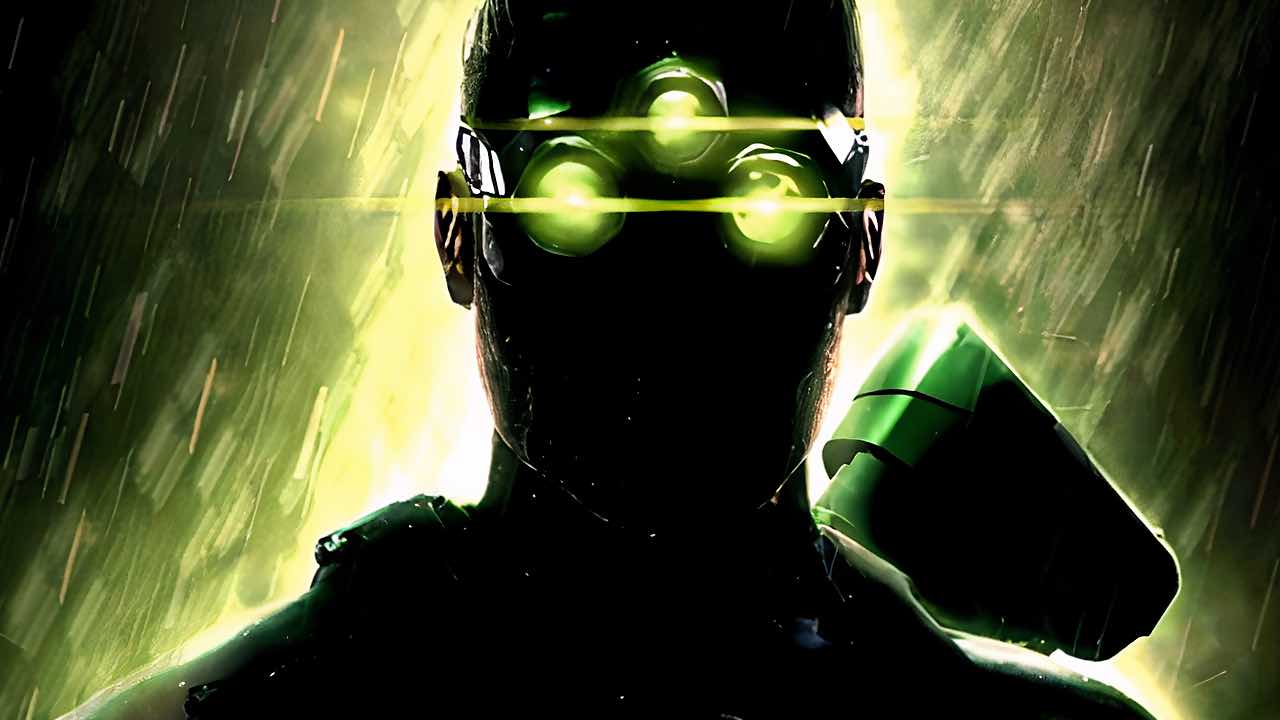
Then just keep the lighting consistent and don’t adjust the camera exposure when players move in and out of light and dark areas. Consistency is key.
This is why we have the yellow paint epidemic
This is one of the critiques I have of modern shooters, too. In Quake 1, if you run into a tough baddie, you can duck around the corner, and bank a grenade off the cement wall, and hit his giant, blocky hitbox. In Modern SciFi Shooter 27, you duck around the corner, and try to shoot a grenade at the upturned market cart that served as the corner barrier, and it bounces away with an odd angle, then misses because the creature you found has elaborate animations, thin limbs, and a thinner hitbox.
Part of why the boomer shooter genre has largely devolved in graphics.
You just dont have to do that? You can change the lighting so it is more informative for a stealth game rather than have it be realismmaxxed for no reason.
Honestly games focus so much on unimportant nonsense to keep the feeling of realism, then you clip through a wall and see your character’s teeth from the inside.
Had a nice giggle, thanks
Yeah a big trend right now is indie games made with what is basically PS1 graphics. Having more tools for better graphics and lighting does not at all mean you have to make your game look a certain way.
I love the look of cel shading. Make a stylistic art choice. Hell, make it pixelated. Idc of i can count the stitching on the clothes.
Or make lighting less of a factor in detection. Line of sight only worked just fine for Dishonored, and Assassin’s Creed used to have a fantastic social stealth system.
No. Light was like, the primary stealth mechanic of Splinter Cell games. Well, the good ones anyway. The HUD literally has a Light Meter on it to tell you how detectable you are.
Thats like saying “Just make Sonic slower.” Its literally the main mechanic of the game.
I totally forgot about the light meter but why wouldn’t that work in a newer game? Just habe normal lighting but with a light meter so you can tell if you’re hidden or not. BG3 lets you know if you’re fully lit, half hidden, or fully in shadow so i don’t see why that can’t be expanded to a more fleshed out system.
It could. But modern devekoeprs:
A: need to change stuff just for the sake of changing it for job security (look, you need to keep me as a ux designer on the project because the old UI is outdated and old)
B: new developers dont like UI elements on the gameplay screen
Now, I will tell you that a UI element for a light meter would work perfectly fine and actually be preferred. I would also tell you that MGSV looked phenomenal for the time it came out, and still looks pretty good, and I dont have much of a problem with stealth or sneaking in that game. Now, it is less reliant on light and shadow for its stealth detection than Splinter Cell, but its not out of the realm of possibility that it could be done decently easily. Just use the data from game engine light probes and any baked shadow maps and its fine.
But nah, we gotta overcomplicate it by using dynamic lighting for statically lit levels because that is the easiest method of lighting a level without changing any default options.
As a thief fan, Dishonored’s stealth system felt terrible in comparison.
It’s called art direction. It’s a game if you don’t want to do realistic lighting that’s fine you can do what you want.
But then they would have to alter the default Unreal 5 lighting settings and that’s is WAY too much work for modern developers.
Realistic lighting is kind of a big Splinter Celling point, though. The original and Chaos Theory blew my mind.
This is a peak AAA problem. The need for ultra high fidelity realism clashes with the need to make the actual gameplay.
Maybe they need splashes of yellow paint to show where the stealth area is.
They also need red vision cones to show where the un-stealth area is.
Chaos theory still looks amazing, and that was on the unreal 2.5 engine with hugely prebaked lighting. Just legitimately do that again.
Stop worrying about realism!
Right? I play games to escape reality anyway
In a world where game designers decided “yellow” means “climb here”, it seems crazy that a stealth game can’t be made with better lighting and textures because it becomes readable. That’s the point of stealth.
It’s not any worse than what we had for the OG Splinter Cell except when the developers make it way too damn dark. Hollywood has a similar problem with a lot of modern movies.
Also I find it ironic that one of the things I remember seeing people complain about with Hitman: Blood Money was the, at the time, new system that let 47 highlight usable objects in the world. The previous games made you faf around just trying to use anything because you couldn’t tell a random background object from something you could actually use. Lotta people whined that it oversimplified the game.
Oh sure, a genre that got on the radar with a 1987 MSX game, one that became what it is partly because of hardware limitations, is impossible to do nowadays because “now we can do realism”.
Talk about creating problems for yourself.
There are two really good examples of how to represent that from the past two Splinter Cell games. I’m not convinced it got any harder from this explanation.
It definitely didn’t. The lighting doesn’t need to be AMAZING when you can literally add a light blue bloom to the edge of the screen to simply express that you’re hidden.
Theyr all just out here tryna make me buy a new video card. Ain’t happinen slick
What? As if with global illumination there are no hard shadows. If you walk around when the sun is shining, guess what type of shadow you have? So the solution is to only create levels with few, bright light sources so that hard shadows get cast.