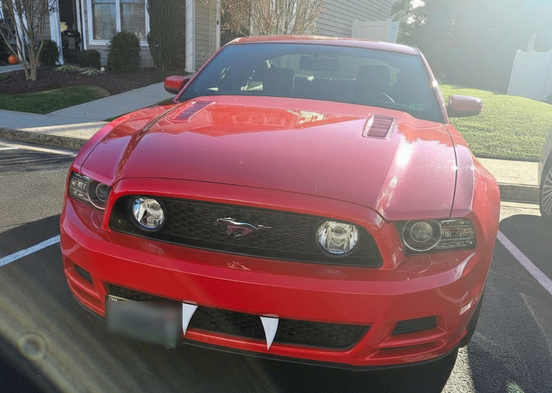


They just keep reinventing trains except shittier.
What if we made the train wide and flat, gave it armor plating, bolted a pair of claws on the front, and let it run sideways?

Traininisation
Boxcarcinization.
Crustation
It’s always trains
it’s ~pods~. completely different.
Yes, trains have real throughput.
“Trains, but without the tracks.”
Trains but without having to sit next to people who aren’t your staff.
What if we had trains, but bigger?
I’m not making a joke, I honestly think making the track a little wider would be a great innovation.
Obligatory XKCD.
Well it would require wider curves and be incompatible with existing rolling stock.
“I have invented a computer that can handle the complexities of a dense, conflicting network of streets prone to collisions with on-traffic. It just needs a specialized road that is less dense and doesn’t have conflicts with other on-traffic.”
“Is your program just ‘Accelerator-turn-on()’?”
“How did you get that information?? Who broke NDA!?”There’s more to it than that, you also have to decelerate now and then
I have to go, I’ve said too much
Just slap a
-on theaccelerate()
Techbros really going beyond to invent shittier less efficient trains.
They’re not really trying to do anything. They’re trying to get venture capital money. The more impressive and revolutionary the blender render is, the more likely they are to get some fat, unsecured VC money. Then they’ll cash out and move on to the next thing.
It’s a grift. They just need the poors to be excited about their bullshit to convince someone with money that there’s money to be made with their bullshit.
They insist on recreating everything in modern society from first principles, rather than just learning from the past.
They can’t just accept that X is a bad idea, and we know this because we fucking tried it several times. That’s why we do Y, even though it might seem counterintuitive. They just need to go through it themselves, and fuck the people whose lives are ruined in the process. Collateral damage. To learn something that we already fucking know and have been telling you
This is what I bring up with a coworker all the time as to why education is so important. Knowing the mistakes and pitfalls from the road to get to where we are right now is important so you don’t waste time trying to reinvent the wheel. Also it helps when you look at a problem and think “The solution is SO obvious! Just X!”. After education you tend to think “There’s probably a good reason we don’t ‘Just X!’, I just am unaware of it.”. Though you srill need to do your due diligence and research.
That said, there are always ideas that weren’t feasible at the time, or some breakthrough that they never thought of in the past that could make something relevant.
Several years back there was a startup?, I think, that tried to revolutionize rail traffic with autonomous wagons that intelligently form wagontracks with decentralized coordination. The question, how they would coordinate between all the local rulings and different track designs, was answered with ‘There is data for that to use and everyone will restructure for their glorious idea’ - safe to say they didn’t went viral
There have been a few. The best idea was a rail that went down every road. You could call train pods like an Uber to go anywhere. Computers could regulate everything. Anyone could use them. Cars are dumb.
There was talk of embedding sensors in the roads that the auto-driving cars could track… Like Bots’ Dots but with RFID tags in them… I figure that would be a maintenance nightmore though…
you could also maybe make the cars scan street signs to tell their current location? these street signs largely already exist as human drivers have to read them too.
Character recognition takes a LOT more processing power than reading an RFID tag.
hence the QR code suggestion, it also wouldn’t depend on rfid tags embedded in the road surface that would get worn and damaged and needs replacement way more frequently than a sign with a QR code.
RFID tags seems like an odd choice. They have such a limited range. It feels like there would be a material that is extra easy for sensors to detect, and could maybe carry a small amount of information.
Probably, but really when it comes to driving there just needs to be an encoded lcoation in it… Hell three-words is all you need to mark any spot on the map to within 10’…
and what they really need is enough range to detect the last one, the closest one, and the next one…
There are a lot of ways to do it…Cameras and GPS are not it… I won’t go near any of the current incarnation of “Self Driving” pieces of shit… 40 years in IT and I know enough about computers that I don’t want one making real decisions for me.
I am currently at the tail end of a 3 week trip from Amsterdam to Lisbon, all via train. It is fucking awesome. Not to mention that as a tourist you can use the public transportation in various cities for free. Europe has it figured out.
Man, I’m surprised to hear that. International travel is infamously shit, that’s part of why so many Europeans fly. The trains themselves are fine, but there’s a mishmash of standards, electrical systems, booking systems, etc, and every country just wants to engage in protectionism and refuses to harmonize with others. Trying to book travel through multiple countries is usually seen as a bigger headache than it’s worth, not to mention more costly, than flying which is just backwards in terms of incentives.
Maybe if you’re getting one of the tourist Eurrail pass thingies it isn’t so bad, but for regular international use (aside from just going to one country over, so just one journey) Europe really needs to standardize its rail travel much, much more.
I used Interrail and I booked everything through that. Easy as pie.
I mean… I’d totally rock a personal mini train that left when I wanted and rode on a track.
That basically how trains work in Copenhagen. They use small, automated trains that come every 1-2 minutes. You just wander to the station and get on, no planning or anything.
And also has a station at my house.
Nah, that would make it hella dangerous to just be a person existing in that space. Much safer to use trains to get to a city and then travel in the city by personal conveyance, like a bike or something. Imagine how awful life would be if we gave all that space to train tracks just for individual use. It would be an isolated, lonely nightmare. Not to mention super expensive too. Train engines, no matter how small, are not cheap to own or operate.
I’m going to want something with a roof, windows, and climate control, though – for when the weather is bad.
I bicycle plenty, but there are definitely times when I’d rather not and it’s miserable.
Friend, I am acutely aware. We humans haven’t taken very good care of our habitat, and it’s showing. The next years aren’t going to be fun, but perhaps if all humans everywhere can manage to find the will, we can mitigate some damage.
LOL
What is the “self-driving car problem” that the comment refers to?
Self driving cars as so far pretty shit. They have a tendency to fail ungracefully leading to considerable death and destruction.
This could be fixed by making purpose built roads for electric cars so that the environment is always predictable. However at that point you’re describing a train track and might as well run trains on it.
considerable death and destruction
Alternative facts?
Ummm… no?
I guess you’re a shill and are going to say that self driving cars have caused way less death than human operated ones. While true, statistically the deaths caused by each self driving car is much higher than by each human operated car.
Also it should be argued that a machine should be held to a higher safety standard than a human.
I looked for studies, but completely autonomous driving has too little data yet. But from A matched case-control analysis of autonomous vs human-driven vehicle accidents | Nature Communications, severe injury and fatalities are lower. I suspect “per driven mile” it’s even less and it depends on model.
Not sure where you get your numbers shout DEATH AND DESTRUCTION!!! about self driving cars. I can only assume it’s out of your ass.
It doesn’t even matter. 65 fatalities over a few years is nothing. What matters is how the technology improves in the next years and how the numbers look once there is significant adoption. That it’s as good as it is now basically means you’re already wrong.
First of all thank you for a more well reasoned answer.
I do think that there are several issues remaining however. First of all the cited article states that in case matched scenarios autonomous vehicles are less likely to crash, however this does not apply in bad weather conditions where they are about 6 times more likely to crash.
The above illustrates my point about failing gracefully, the autonomous systems work great under a huge range of conditions, the catch being that these conditions have to be preconceived. When encountering new conditions these systems tend to fail. These untested conditions might occur to bad visibility or water over camera lenses and so on. A human just is better at adapting to new situations quickly which is also confirmed in the above figures.
Now to the point of the future development and mass adoption I am not really opposed due to safety concerns, it is possible to make these systems safe. However in order to make them safe you would have to make their surroundings extremely predictable. I.e. you would have to adapt the infrastructure to suit the autonomous car. If you’re building infrastructure anyway, why not built rail infrastructure? It’s proven, cheaper, more efficient, has a proven safety record and is environmentally friendly.
Cars are great for situations where you need transport over areas that are quite unpredictable e.g. many rural areas with badly maintained roads. However autonomous vehicles are not suited for this unpredictability.
The fact that autonomous vehicles are being pushed anyway regardless of the risks is stupid in my opinion as the resources and brain cycles could be much better invested.
I’ve recently imagined if you could build some kind of “micro monorail”. Like some simple 4x4 inch metal rail that is used for a very small “pod” similar to the podbike / a velomobile. Like a 1 seater or 2 face to face seater which only weights like 200 kg instead of large heavy trains. You could just use earth screws and poles and weld them to the microrail, have it close to the ground or rise up 6 meters high to cross over existing roads or obstacles. You could also have a welding robot on that same rail to endlessly extend the rail and do all this installation automatically. And everything could be recycled.
I’m not sure you can follow this somewhat mad idea, but this could connect rural and urban areas without the need to build costly roads, and at the same time transport internet, energy, goods, trash, maybe even water. Fully automated and with ultralight vehicles this could be the cheapest, least invasive and lowest energy transport ever.
Anyway, I’m a fan of rail, but it does have a problem: You need railroad switches and that adds a lot of complexity compared to a car. Every stop, turnaround or crossing needs it’s own stopping rail and switches which adds a lot of moving parts. So for some parts this could be a great solution, but for others it’s overkill. Basically in a city, there is a limit to how close rail can get you to your house.
So in a city you’re stuck with waiting for larger train cars and longer walking times. Small individual railcars won’t work, and so they can’t replace roads or cars. I believe that it’s like a fundamental mathematical density limit to rail. And if you go shopping, you don’t want to carry heavy bags or crates for like 10 min to your house. You can, but it kinda sucks.
And I don’t believe that within a city at 50 kmh energy consumption between a self driving “podbike” with rubber inflatible wheels on roads and a tram or metro is significant. It probably only is about 10% at max, or maybe even less.
So in an urban area self driving “micro cars” would be the most universal scaling solution that would be most comfortable to people as well because they can drive you and your baggage directly in front of your house and can pick you up.
Obviously I haven’t run the numbers, and I don’t understand why there aren’t any self driving narrow 1 or 2 seater cars build out of bicycle parts. Isn’t this the obvious solution? There are so many advantages. Just build a million of them for one metropolis and completely switch over, ban all cars and test how it works. And make it publicly owned, basically free to ride robo taxies. It’ll be cheaper for the city. Just the amount of real estate you’d gain from no big cars would be worth so much money.
Alternative facts?
No, reality.
we’re going to need a source on that
Ok Im assuming you’re either deluded, paid or an LLM. In the case you’re actually human, go find some statistics.
I don’t know how to prove I’m a human… cock shit asshole with fucking toejam stuck in my dickhole… is that something AI would say? Does that work for you.
Anyway,
https://www.mckinsey.com/capabilities/quantumblack/our-insights/the-state-of-ai
In 2017 about 20% of companies were using AI. In 2025 that number was at 88%
“The share of respondents saying their organizations are using AI in at least one business function has increased since our research last year: 88 percent report regular AI use in at least one business function, compared with 78 percent a year ago. At the enterprise level, the majority are still in the experimenting or piloting stages with approximately one-third reporting that their companies have begun to scale their AI programs”
“The use of AI overall is broadening within organizations. Respondents increasingly report that their organizations are using AI in more business functions. More than two-thirds of respondents now say their organizations are using AI in more than one function, and half report using AI in three of more functions.”
“By industry, the use of AI agents is most widely reported in the technology, media and telecommunications, and healthcare sectors.”
“Many companies, particularly smaller ones, have yet to integrate AI deeply across their workflows… Nearly half of respondents from companies with more than $5 billion in revenue have reached the scaling phase, compared with 29 percent of those with less than $100 million in revenues”
Cool, although I hope you’re aware that you’re confusing LLMs (mainstream in 2022) and machine learning which has existed for decades. Also what does this have to do with self driving cars?
but… you have to lay down tarmac instead of metal rails
I’m gonna lay this on you, but it is not an attack on you specifically. A railroad track, while way more expensive upfront, has a way lower maintenance cost on the long run. Asphalt road, while cheaper upfront, essentially needs to be rebuild virtually from scratch every six months or so. Depending on weather and heavy load usage, an asphalt road –despite being made out of almost 90% recyclable material– will cost just as much and maybe even much more than rail over the span of 10 years. On the same page rail is, not entirely but almost, completely impervious to weather and heavy load damage. So the maintenance costs are nearly fixed and highly predictable. Asphalt is variable and unpredictable, a road could last 18 months or 3 months. Finally, the labor costs of road maintenance are way higher than rail maintenance, while being several times more deadly. Because drivers keep insisting on running over road workers.
I think the problem is that self driving cars suck
Tracks
The only way to solve the self driving cat issue is to ban all human drivers from the road.
So, if some techbro wants self driving cars, just give everybody one. All electric of course.
The only way to solve the self driving cat issue is to ban all human drivers from the road.
…and cyclists, and pedestrians, and farm tractors, and horses, and wagons, and stray pets, and wildlife, and…
Cyclist belong on their bicycle lanes , and those lanes belong besides every road.
Pedestrians belong on walkways, along every road
What is about stray pets and railroads? Horses , dogs, cats?
If we are talking about something so unrealistic and futuristic like autonomous vehicles lvl 5+. We may as well assume that we fixed everything else at that point of time.
Or, we just can take this as what it is. A sarcastic joke
Cyclists and pedestrians shouldn’t be on the road.
Unless you’re in the US (my condolences) you have a footpath/sidewalk/pavement for walking.
Bikes should (but rarely do) have their own physically seperated infrastructure, so they’re not getting hit by cars/busses/trucks/etc and not hitting pedestrians.
Cyclists can go on the road just fine, as long as the road is built and regulated for more than just cars
No, bikes should never be on Roads.
Streets, yes, Roads, no.
Eh, it depends. Faster bike traffic shouldn’t really be in such close proximity to pedestrians. On a lot of city streets, a fast bike is way closer to the speed of a car than to a pedestrian. City centers, especially non arterials, I’d say they should be in the street if there’s no path. I’m not particularly fast at just under 30kph and it’s rare for traffic to be much faster downtown here, especially non arterials I’m often passing them. I think that’s generally too fast to safely ride on a sidewalk, but a safe speed there would make cycling not very practical for me.
Which I can assure, unfortunately, no cycle paths is often the case in my part of eastern/central Europe
My hope has always been that if self driving cars are successful, almost nobody will own a personal car.
Cars are massively wasteful. Put aside the idea you’re hauling around multiple tonnes of steel and glass frequently to just move one person. Ignore the pollution aspect too. They’re also wasteful because they’re used for maybe 2 hours per day, and the other 22 they just sit somewhere taking up space and getting rusty.
Just think about how many stationary cars you pass when you’re out in the world. Nobody’s getting any use out of them, they’re just sitting there in case they’re needed, meanwhile they’re taking up useful space. There are other potentially expensive things you only use for a short amount of time each day: say, a good kitchen knife. But, most of them are indoors where they’re not exposed to the elements and deteriorating without being used.
In a future with self-driving cars, owning a car could be a luxury that enthusiasts could pay for, if it was worth it to them, but everybody else who needed a car could just rent a car for an hour or two.
I think that is the difference of perspective. Living in Germany, I did my driver’s license with 22, didn’t need it before. I could live without a car.
Yes, many would profit from shared, autonomous cars. But many would profit from public transport here in Germany to, and guess what. They want cars.
I hate this as much as the next dude. But if they really really want them, at least make them electric
Or make motorcycles more popular ;)
if they really really want them, at least make them electric
And very expensive.
And very expensive.
So only the rich can afford them?
Yes
Giving everybody a self-driving car completely defeats the purpose. Human-driven cars spend about 23 hours of each day just sitting around. A car that can drive itself doesn’t need to spend any time being parked - it can provide another ride! Liberally assuming a self-driving car would need to spend a full half of its time (12 hours/day) charging or being serviced, that would still mean that replacing all cars with autonomous vehicles could reduce traffic volume by a theoretical limit of 12× (12 hours/day/vehicle vs. 1 hour/day/vehicle).
Is that realistic, though? A car is already a status toy, what’s to stop conspicuous consumption in the form of buying one’s own self-driving car? Or, say, moving to a cheaper house further from the city, because commute time can now be used as work time? Shared cars won’t work in that scenario.
Also, rush hour is still a thing. There have to be enough UAVs to handle peak demand, and then most of them will be parked somewhere, idle most of the time. Or running errands. Traffic congestion is bad enough now, with average vehicle occupancy of 1.2 people; it’ll be apocalyptic when that number drops below one.
Also, in cities with sky-high housing costs, i guarantee that people will live in self-driving RVs, because road space is “free.”
In short, the only way to realize the benefits of the shared UAV future is to ban private car ownership, and cap the number of UAVs in a city. That sounds a lot like a train, except trains’ enormous capacity offers better service.
I doubt that we’ll be seeing UAVs for personal transport anytime soon. Terrestrial vehicles are significantly easier to manage.
The main thing that will prevent people from purchasing their own AVs will be availability. Waymo and Zoox, for example, are running services, not selling their multi-hundred-thousand-dollar vehicles to the general public. (I’m not bothering to address Tesla as their autonomy stack is an industry joke.)
Elimination of personal vehicles would make public transit more attractive; with the previously foregone conclusion that one must own a vehicle gone, the choice is between a few dollars for transit, or several times more than that for a private vehicle. How many people currently choose to take an Uber or Lyft to and from work?
Also, trains don’t have curbside service.
UAV meaning Unmanned Autonomous Vehicle. (In contrast to rideshare services, like Uber. When they were heavily subsidized, it must be noted, they increased traffic congestion.) Availability of them will increase. The reason that we have an auto-dominated landscape today is that car makers wanted to sell more cars. There’s approximately 0% chance that car makers today will be satisfied selling a limited number of vehicles for ride services, when they could sell vastly more cars to individuals.
UAV already stands for “unmanned aerial vehicle.” Besides, using both “unmanned” and “autonomous” is redundant. Anyway, the standard abbreviation for autonomous vehicles is AV.
Buggy whip salesmen gonna have to deal with it.
I suppose a vehicle that is being driven by remote control is unmanned but not autonomous.
Sure, but an autonomous vehicle is by definition unmanned.
Why would it reduce traffic volume? The cars that are on the road are the ones that are currently in their hour of driving that day, it would more reduce the size of parking lots and parking space allocation, or at least move it to charging hubs away from where people congregate.
Elimination of personal vehicles would make public transit more attractive; with the previously foregone conclusion that one must own a vehicle gone, the choice is between a few dollars for transit, or several times more than that for a private vehicle. How many people currently choose to take an Uber or Lyft to and from work?
Yeah it would be better still if we we had actual improved public transport systems for carry more people at once rather than automated personal vehicles, even if those automated personal vehicles are shared like taxis. The cost of automation and requirement for removing all other vehicles, pedestrians, cyclists and animals from the roads is immediately removed and the benefits obtained by reducing traffic is immediately realised just by using human driven buses and trains.
Well, one of them is happening faster than the other, so let’s not perfect be the enemy of good.
it would more reduce the size of parking lots and parking space allocation
Which would in turn affect city design, letting buildings be placed closer together, making it so you don’t have to drive as far, which would then reduce traffic.
I think the reduction would be slight versus the reduction realised by improving the quality of existing human operated public transport like buses and trains. A mass transit system relying on individual automated cars is a tech bro brain fart.
you’re forgetting here that all people want to commute at the same time between 7am and 9am in the morning. so you can’t just operate 1 vehicle 24 hours around, you need the vehicles for these two hours especially and then some in the afternoon.
Elimination of personal vehicles would make public transit more attractive; with the previously foregone conclusion that one must own a vehicle gone, the choice is between a few dollars for transit, or several times more than that for a private vehicle. How many people currently choose to take an Uber or Lyft to and from work?
Also, it’s certainly not all people.
Giving everybody a self-driving car completely defeats the purpose.
Not really, battery-electric cars can double as your household battery bank.
Get rid of privately owned cars and you might be on to something. If the state owned a fleet of self driving cars you could rent at the car library, that would probably be better than everyone having their own car they park somewhere most of the time.
Building walkable living spaces with mass transit would be better for more people environmentally, economically, health-wise, socially…
Well, nobody’s gonna be able to afford an actual working autonomous vehicle, and it won’t make sense either economically or operationally to privately own one even if they could.
If the state owned a fleet of self driving cars you could rent at the car library
Until Trump or equivalent decides you’re not allowed to leave the city because you posted some nasty things about him.
Forcing non-private ownership means everyone is at the mercy of the state allowing them to borrow transport. How long before the Gays aren’t allowed to drive? Women can’t drive? That’s the future your espousing.
Do you have the same fear about trains?
trains rule
All I know is that the tunnel snakes rule. I don’t know whether a train is technically a tunnel snake or not.
I agree about tunnels snakes. You cannot deny. They just manifested ruling in their default introduction and have not given one reason NOT to rule since. They too, are born from train’s sibling using a term someone made a portmonteau of the subterranian…WAY? Normalize subtrainian.
Trains for long haul + autotaxis (or air taxis) for short, low speed rides actually sounds pretty dope.
Trains cant take you to specific spots, especially outside the greater urban areas.
When my public transport to work stops being 3-4x longer than simply driving, not to mention the inherent issues of being stuffed into a bus, let me know.
Sounds like you want more and better public transportation.
Trains cant take you to specific spots, especially outside the greater urban areas.
That’s called the “Last mile” problem. Trains and buses aren’t much good for a whole day’s worth of shopping either. Try and haul 2 weeks worth of groceries for a family of 3 on a bus. But trains are great for longer distance travel from one area to another. And buses can be great for a quick one-stop trip to the hardware store. But a cargo e-bike would be better yet for light shopping.
I’m all for banning all motor vehicles in major cities, except emergency units. And leave the daily driving to those of us that live in the middle of nowhere and seldom visit large cities.
Dense public transportation sorta fixes the last mile problem. And buying local fixes the Walmart/carrefour problem. I buy groceries every two or three days, and the grocery shops are always at walking distance from home.
“Sorta fixes” ain’t really a fix. And not everyone has the time or ability to go shopping every two or three days. Nor are grocery stores within walking distance for everyone.
That’s the thing. Car orientation shapes how places look and function, but so does tranist orientation. What you consider a downside is actually driving that. Because transit focuses movement along hubs and spokes, this enables walking oriented infrastructure. And walking oriented stores at transit stops enable fast shopping. You can easily shop even daily when all it takes is maybe 5-10 additional minutes on your way home. In car oriented hypermarkets you can’ even make it to the back of the store in that time.
There are also people with mobility limitations.
So what? It depends on the kind of mobility impairment, if rail is suitable. Good rail and transit systems accomodate people in wheel chairs just fine, if you are impaired in other ways and can’t use a wheel chair you still got plenty of options. The Netherlands show that transit oriented cities are actually better and safer for people with limited mobility.
Thing is, we’ve got cities built for cars. The only thing removing cars does in those cities is make everyone miserable. Fixing that would require tearing those cities down to bedrock and starting over from scratch.
The Netherlands have not torn down their cities to the ground even if their cities were pretty car centric in the late 1960s. Of course If you cry for the failed city highway in Utrecht for example that has been replaced with a gracht and scaled down to a regular street, that transformation is a catastrophe for you.
Cities change over time, if you change them away from being car only, that doesn’t need dramatic sudden changes but can be achieved with gradual changes over time.
You’re clearly not paying attention. Plenty of cities have successfully switched to more walking-focused infrastructure and it hardly requires tearing them down and starting over from scratch. That’s a bit of an overreaction.
That line of argumentation can only be made by someone who can only imagine a car centric way of life. Why would you even do a two week shopping if a well sorted super market is just around the corner or next to your final transit stop?
That said, it is not much of a deal to do larger shopping. You can put a lot in a shopping trolley, also heavy stuff and move it with ease, to your very kitchen. The thing is, if you are shopping that much so infrequently you have to live orimarily from non-fresh food, or old food. Why would you want that?.
You assume large and well stocked grocery stores exist everywhere. That is most assuredly not the case in every city, town, or hamlet. And as for large amounts of shopping, you have never fed a teenage boy or girl have you. They can eat up their weight in groceries every week. And yes, fresh arugula is not readily available in many places. So that’s great for you. But again, don’t assume other people get to have the same choices you do.
I am talking about urban and suburban context. Not rural scenarios where transit cannot be a full alternative.
What you miss is that the way your city/suburb looks like is a direct function of your urban planning. Transit itself fosters the creation of super markets at its stops. Which is why you will usually find those at stops in transit oriented places. As their main customers are transit users they also cater to their preferences and are designed differently from car oriented stores. Usually they allow for much faster shopping while having a focused but complete sortiment (not just chips, sweets and beer)
You’d be surprised, there are plenty of young families in Vienna in the new pedestrian oriented quarters, many if not most don’t even own a car. Somehow you can manage just fine that way. It is one of those myths that you need a car with young ones, if you live in a transit oriented place or suffer for it. If need be just get a shopping trolley, folding handcart or freight bike.
PS: It is nice to see how you assume fresh bread, vegetable, meat etc are necessarily a luxury. I assume that idea also comes from the context of a car centric society.
is nice to see how you assume fresh bread, vegetable, meat etc are necessarily a luxury. I assume that idea also comes from the context of a car centric society.
cries in USA
Spoken like an upper middle class person. And yes, fresh tomatoes and lettuce can be a luxury even in a dense city. Food deserts exist even there. Not everyone lives in Vienna or the Netherlands. And ordinary people do NOT get to choose the urban planning they can afford live in. Almost all of it was decided 100+ years ago. And is nearly impossible to change now. Unless you want to move large numbers of the population out of an area to demolish and rebuild that much new infrastructure, a thing that often gets called “gentrification”. And what of the poor people who can’t afford to live where you do and how you do? They very often live the farthest away from all those things you take for granted.
It seems like you’re arguing that a better way of doing things is hard, therefore not worth doing, or that a century ago was the cutoff for deciding how we do transportation.
The way our stuff is laid out makes it difficult to live without a car. That doesn’t make the car a necessity in the abstract when that layout and design is often the direct product of designing around cars in the first place. It makes the car a necessity in the specific system we have for many people.
“We can’t do things differently because then it’s harder to do things exactly the same” is a weak argument.Spoken like an upper middle class person
Are you actually using your perception of someone else’s economic class as an argument? When you’re arguing in defense of car based suburban sprawl and buying groceries by the carload?
Like I said, your opinion seems to be formed by a car oriented society and you appear to struggle to imagine an alternative. If you need to watch your finances you can find all those fresh produces at urban discounters in transit oriented cities. Buying those without the need for a car is actually less costly than having a car and buying the cheapest worst kind of food.
That is the thing transit oriented cities generally enable that. I m well aware that not every city is transit oriented. I am not saying people living in these places have a choice. I am saying urban planers have a choice to change how the cities look for the next generation(s). You mentioned the Netherlands, they are a great example for that. 2 generations ago they were very car oriented following the US lead. Not 100 years ago, 50 years ago.
I am not saying people living in these places have a choice. I am saying urban planers have a choice to change how the cities look for the next generation(s).
Rampant fascism is on the rise, here and abroad. We can’t even get US citizens to recognize Mamdami is center, at best, or as I’m discussing elsewhere, how to even get our compatriots online not to accuse us of being trolls, and in 3D not to view us as enemy (see also POTUS reverting to full McCarthyite “Godless communists” red scare tactics on Truth Social).
And to be a dick about it too, really shows how disconnected from others reality some folks are.
Food deserts.
Last mile is solved by small folding bikes like the Brompton with ease. Also, 2 weeks worth of groceries is just so many groceries. You don’t need that many at once, lol
not to mention the inherent issues of being stuffed into a bus, let me know.
???
Trains don’t rule that much when they lose power in a 40 degree heat which is happening all over Europe right now.
yeah because cars never break down during high heat or cold and ac never fails in them…
Trains don’t have a higher failure rate than car infrastructure. Most of the rail infrastructure works just fine, at 40C. Occasionally something can get damaged. Aviation is much more fragile regarding weather but interestingly doesn’t get all that heat from transit haters and cars are way more dangerous and on top of that can overheat at extreme temperatures.
Yes, most of it works fine but when it doesn’t:
- the AC stops working, the windows don’t open and it gets real hot real fast
- unless it’s some extreme situation they will not let you leave the train
- you’re stuck in the middle of nowhere, with no infrastructure in sight
- it’s really hard to get you to alternative transport
- fixing the issue can take hours
With a car:
- you can get outside
- you will have to wait 30-60 minutes to get towed
You see multiple news every day about trains in Spain,Poland or Germany with broken AC or just completely failing between stations.
Btw news bias. There are so many people dying in car accidents, that the news would be full of them, every single day, if they got the coverege that even non lethal technical issues with trains get.
It’s all a matter of control, same as with planes. People prefer to drive because they want to be in control. They imagine they will be able to handle difficult situations and will not die. Being stuck in a hot train, not being able to even open a window and not knowing how long you will have to stay there is a nightmare scenario for many people. Of course dying in a crash is worse but it’s the lack of control that freaks people out.
That is a completely irrational argument. Car drivers are not really more in control. They are stuck in traffic jams, beyond their control. I enjoy actually more flexibilty during commute than car drivers. They have to avoid rush hour or be stuck, while rush hour in my train is perfectly fine. Also in an urban environment car drivers are much less in control as you have to search ages for on street parking close to any poplar destination or pay up for a garage that may be also full during high demand. No such worries with transit. People are much more frequently stuck on clogged roads than on a train.
Driving is also much more likely to kill you.
Yes, people very often are not rational.
That we can agree on. However urban planning and transport planning should not be based on irrational arguments. You get what you build. Weirdly enough, people in transit oriented cities are using transit as their main means of transportation, people in car oriented cities don’t.
They usually advise you not to get out of your car for the exact reason they advise you not to get off the train.
I’m not sure what’s exclusive to trains about breaking down in the middle of nowhere. It’s not exactly trivial to get a replacement car either, nor is repair somehow instant.
I get what you’re saying, but it’s way less one sided than you’re trying to convey. My car once broke down on the freeway in a city. I had to wait more than an hour for a tow and then walk home, which took two hours. Had to get random coworkers or friends to take me to work while my car was repaired over the next two weeks.
Oh, and traffic jams are routine for cars.
Nothing is gained by pretending there’s no downsides to any mode of transportation. They all have them. In aggregate though, most people would be better off if we had more available than just “car”.
I’m not comparing the inconvenience of both situation from the breakdown to the cost of repair.
I’m talking specifically about getting stuck in train on a hot day. Is that really so difficult to understand?
Have you ever seen red heat alert advisory telling people to drive only if necessary and take precautions? I haven’t. Why do you think they issue those for trains but not cars?
https://www.gbnews.com/lifestyle/cars/weather-air-con-postpone-car-journeys-warning
It adds: “Give yourself the best chance of avoiding delays by checking road conditions if driving, or bus and train timetables, amending your travel plans if necessary.”
This has been echoed by the RAC, which explained that red extreme heat warnings are incredibly rare, and called on Britons to take them seriously.
Data from the organisation states that breakdown volumes are expected to be around 20 per cent higher today than what’s normal for a Monday in late June.
I literally just searched for it and trivially found them.
They’re specifically saying vehicles without air conditioning, while also discussing worsening road conditions, increased risk of breakdown, and a general need to limit travel.
They issue the warnings for trains and not cars because train rails expand in the heat, meaning service cancellation is more likely and deferring optional travel reduces stress on the system.
Any time there is stress on a transit system they advise people to skip using it if necessary.Your position is not hard to understand. It’s just one-sided because you’re only considering the downsides of one method, and not considering what the same situation looks like for the other.
They’re specifically saying vehicles without air conditioning,
Exactly. They are talking about driving a car without AC. The rail one is talking about taking a train with AC.
Again, I’m not comparing the two modes of transportation and all their aspects. I’m not even saying that trains are bad and cars are better. I just pointed out that being stuck in a train during a heatwave is a terrible experience. It does happen and is a real concern for people in Spain. I personally know claustrophobic people that avoid trains for that reason and prefer to take a bus. The big difference for them is that they can get out of a broken bus while you can’t just leave the train whenever you want. Many people don’t like being stuck.
Those are all simple facts but people here are so adamant that trains are better in every way they can’t accept them. They will instead argue that you can in fact open windows and doors in a train (you can’t) or start talking about the total repair time of a car (irrelevant).
It’s not exactly irrelevant when you brought up repair time and alternative transportation.
I feel like you didn’t read your own article. The AC on the train doesn’t really factor into their warning.
They advised people to avoid the train to avoid congestion of the system because trains travel slower when the rails heat up.
They advised people to defer car travel because roads will be more congested due to heat causing mechanical issues in car engines. They also said if you don’t have ac that it could be actively dangerous.Listing a big list of cons for one and then saying the other one doesn’t have them really makes it seem like a comparison, particularly when it doesn’t seem like an equally applied standard.
You see multiple news every day about trains in Spain,Poland or Germany with broken AC or just completely failing between stations.
Really? FoxNews?
Is that the only source you know? I have plenty others. You want links?
Yes, actually, It would really help prove your claims.
And now check for news about limit road access, bridge closures etc in all of Europe. There are plenty of those too? Indeed.
the AC stops working, the windows don’t open and it gets real hot real fast unless it’s some extreme situation they will not let you leave the train
That sounds to me like an extreme situation.
All trains have emergency releases on the door to allow manual opening. Practically, if it is actually getting hot to the point of danger, no conductor is going to physically stop you from leaving the train. More likely they’d be the ones to let people off.
I’d need to see a news story of this happening where they were trying to force people to stay on a dangerously hot train. This sounds like a made up scenario.
I never said they will physically stop you from leaving the train so I’m not going to prove it happened.
they will not let you leave the train
?
They will not open the door you dufus. They will not say “everyone can just jump out on the tracks and walk around”. There may be trains riding on other tracks and there’s no sidewalk next to the tracks. You can get a fine for using emergency exit. That’s why people stay inside, not because someone is holding them down.
They will not open the door you dufus.
No need to be a prick :).
They will indeed do exactly this in my experience. We even had a sort of viral video of this happening here in Hungary… train broke down, they opened the doors and walked people through the nearby woods to the nearest village.
If Hungary is managing a better train experience than Spain… I would understand your frustration, the situation must be pretty damn dire there.
But again, I doubt this has happened at all… even aside from physical, can you cite a situation where conductors would not “let people off the train” when it was getting dangerously hot during a breakdown? It’s hard to believe that Hungary would handle this better…
You can get a fine for using emergency exit.
In a non emergency, of course.
None of these issues is exclusive to trains. I would argue that they are more common in cars, and even more, cars take, on average, longer to repair.
You see multiple news every day about trains in Spain,Poland or Germany with broken AC or just completely failing between stations.
I’m not sure what you’re trying to say here. Cars break down all the time, and there’s the entire car repair industry to prove that, but obviously they don’t make the news.
None of these issues is exclusive to trains. I would argue that they are more common in cars, and even more, cars take, on average, longer to repair.
You would be wrong. People absolutely can open windows in broken cars or get out of them. I had to call a tow track couple of times and it doesn’t take more than an hour. If it happens in a city you can wait in a bar or wherever. If a train breaks 10 meters from the station you will not be allowed to exit. And I don’t care about repair time, I care about the time I’m sitting in a metal box without AC.
Where do you live, that trains don’t have windows or doors that can be opened, and these incidents happen so frequently? Because this is not at all my experience in Western Europe.
Regardless, it is a fact that cars break down more frequently and remediations take longer.
In Spain.
Then that’s impossible because I know for a fact that long distance trains have windows. But also, RENFE incident dataset is publicly available and updated in real time, and there is no way in hell the number of reported incidents is higher than the overall number of broken cars, not even if we were to average by number of passengers, and especially given the fact that the average car fleet age in Spain is 14 years.
If a train breaks 10 meters from the station you will not be allowed to exit.
Stop FUDing, trains have had emergency release systems for decades.
Using emergency release without justification will get you a fine. It sounds like you’ve never been on a train.
Of course it will. I doubt anyone would fine you if you were to use it in an overheated stopped train - although you would probably applaud the fine.
Traffic jam? Not sure how it is in Australia but where I live you are not allowed to leave the car and it can take hours. Traffic jams happen much more frequently than your scenario. Never had AC fail on me in the entire train and I use trains almost daily.
I just lane filter in my motorcycle, I don’t believe in traffic 😎🤘
Opening your helmet in this kind of weather feels like someone is using a hairdryer on your face.
Still more comfortable than than being stuck in traffic, but it’s not great.
Yea once ur above 98 F or so, going faster actually makes you hotter! Like being in an air fryer lol. The air can only cool you down if it’s below body temp! Thankfully where I live even 90f is a RARE heat 🤞 for now…
Good for you then. Properly working trains are great. I will take nice train over driving any time. I’m just saying that often the reality is that trains are not that nice. Many countries in Europe struggle to found railway at the levels required to provide good service, especially with growing demand. I think recent events in Spain show that there are limits to how fast you can expand railway. Not everyone can just switch, it will be a long, difficult process.
All problems of priorities and political will, like I said previously. Plenty of rail systems show they can work just fine. They are a lot safer than driving too. Problems can occur with all means and you are just as trapped on a highway as in a defect train.
All problems of priorities and political will,
I disagree. I can see what is happening in my city right now. They want to expand the train service at one of the lines by adding a new track and you can’t do that without stopping the whole service for months. They will provide buses as a replacement which will get stuck in traffic. There’s no amount a political will that will magically expand train service without major disruption. Highway? You can make a detour or slow the traffic down. Airports? You can add entire runways without stopping the service. Trains are different. Trains are difficult.
Problems can occur with all means and you are just as trapped on a highway as in a defect train.
No one will prevent you from opening a window in a car or getting out to stand in some shade. You can’t do that in a train. It’s also way easier to tow a car than a train.
So your argument against trains is that expansion can’t be done without temporary closures and restrictions? Just like with any road project? The problems with cars are just as bad, detours and closures kead to traffic infarcts, and are at least as much of a hassle like transit replacement services.
Expanding airports can be better acommodated but is in many cases close to impossible. Having aviation carry the capacity of an HSR because national infrastructure is underdeveloped is a major issue and limits development.
If you leave your car in my country on the highway, without being involved directly in an accident or such, you have a good chance of losing your drivers license. Opening the windows in a car grilled by the sun, does no good either. Anyone can open the door in a standing train in case of emergency btw. If staff doesn’t allow passanger evacuation in case of danger to passenger health, that is an issue with badly run train services. Tunnels have to have an evacuation plan, at least in decently run systems.
Many countries in Europe struggle to found railway at the levels required to provide good service,
that’s not due to the technology but rather politics and privatization agendas.
Is that an inherent problem of trains or are the trains too old? Genuinely asking
We don’t have such problems in Austria. We also don’t have 40 degrees but I dare say it’s not inherent of trains.
Many issues are inherent to trains. It’s easier to move people to another bus or tow a car. When trains failed in Spain last year on some occasions people got stack in totally inaccessible places and had to wait all night sitting next to the tracks (it was to hot to stay inside the trains without AC). You can’t pull up another train easily or walk people to a bus. Towing the trains was complicated for some reasons. And that were brand new trains failing because of some manufacturing issues.
International trains from Poland have issues with AC because when they are in Germany, German technicians can’t/don’t want to fix them. Mixing operators like that is also an issue inherent to trains. You have different companies responsible for operating the train, the tracks and providing services inside the train. Planes are similar but international services are common and better organized.
Many recent issues in Spain were due to people stealing electric cables. Another problem inherent of trains. You have thousands of kilometers of infrastructure that is difficult to secure but an issue in single place quickly spreads throughout the network.
You have different companies responsible for operating the train, the tracks and providing services inside the train. Planes are similar but international services are common and better organized.
I’m not sure what you are trying to say here, because you imply that this isn’t an issue inherent to trains since the solution in the aviation world is to contract ground crew where airlines have none of their own, which could very well be done by train operators as well.
Also, being stuck inside an airliner while taxiing, with no A/C, just because the systems malfunction slightly and tower don’t agree on which gate they could assign to the flight since it is very early, is a thing I’ve gone through a few times. So, again, not exclusive to trains.
Ok, so it’s not exclusive. Does it make the problem any less real? EU did a study on it recently and it’s way more difficult to travel internationally by train than by plane. It’s just a fact.
Difficult, how? Be specific.
There aren’t many transnational train routes, even in Europe, compared to transnational flights. But that’s not inherent to trains as a means of transportation, it’s a bureaucracy issue.